One of my favorite podcasts - The New Yorker's "Political Scene" - did a great job discussing Obama's trip to China this past week. The conversation can be heard here.
Evan Osnos, The New Yorker's main China writer, knows his stuff.
Thứ Bảy, 21 tháng 11, 2009

Thứ Sáu, 20 tháng 11, 2009
Tis the Season
Christmas tree ornamentation... hmmmmm.
From The LA Times:
But seriously...
One difference between the US and China that I often told my Chinese friends and former students is the difference in recreational drug cultures. In America, nearly one out of three college students smoke marijuana.
I'm not even going to try to find statistics for China. I can guarantee you that it is nowhere near America's rate. In fact, I couldn't imagine that it is even close to being 1%. Marijuana, from everything that I've seen in China, just isn't popular there. Whenever I told Chinese people (admittedly mostly well-to-do ones) about young Americans' largely lax attitudes towards the drug, they could not believe it.
The only times that I ever really heard anything about marijuana were in foreigner tourist spots - the little old ladies in Dali and stocks of it at hostels throughout Yunnan Province come to mind - and in the expat community in Xi'an, for which foreigners living in Xi'an did actually seem to have a system in place for getting the drug consistently (which I think is insane).
Although marijuana is not being embraced by Chinese people, drugs like ecstacy and cocaine seem to be catching on. Whenever I went out to night clubs with friends, it just seemed like such drugs were around. I wasn't offered the drugs persay, but a large portion of the people there seemed to be on something and I knew foreigners in Xi'an who were in to that sort of stuff (and found it readily available).
I think America's drug policy is screwed up. But China's is even scarier. People are executed for drug related crimes there. Messing around with such stuff in China is not a good idea, in my opinion.
From The LA Times:
It's fairly amusing that even this sector of the economy has been outsourced to China. There could be some benefits to the Chinese pipes though. Smoking out of Chinese made glass, given the problems with lead paint and other hazardous chemicals that US products manufactured in China have had in the past, could very well give their users a wide array of added stimulation.
Customs officials at the Los Angeles Harbor received a shipment from China listed as Christmas ornaments.
But when they opened the "presents" Tuesday, they found 316,000 bongs and pipes.
“They’re very colorful and big,” said Cristina Gamez, a spokeswoman for U.S. Customs and Border Protection. “Some of them are like 2 feet tall.”
Gamez said glass bongs and pipes, contained in nearly 860 boxes of cargo, are worth about $2.6 million.
Read On

But seriously...
One difference between the US and China that I often told my Chinese friends and former students is the difference in recreational drug cultures. In America, nearly one out of three college students smoke marijuana.
I'm not even going to try to find statistics for China. I can guarantee you that it is nowhere near America's rate. In fact, I couldn't imagine that it is even close to being 1%. Marijuana, from everything that I've seen in China, just isn't popular there. Whenever I told Chinese people (admittedly mostly well-to-do ones) about young Americans' largely lax attitudes towards the drug, they could not believe it.
The only times that I ever really heard anything about marijuana were in foreigner tourist spots - the little old ladies in Dali and stocks of it at hostels throughout Yunnan Province come to mind - and in the expat community in Xi'an, for which foreigners living in Xi'an did actually seem to have a system in place for getting the drug consistently (which I think is insane).
Although marijuana is not being embraced by Chinese people, drugs like ecstacy and cocaine seem to be catching on. Whenever I went out to night clubs with friends, it just seemed like such drugs were around. I wasn't offered the drugs persay, but a large portion of the people there seemed to be on something and I knew foreigners in Xi'an who were in to that sort of stuff (and found it readily available).
I think America's drug policy is screwed up. But China's is even scarier. People are executed for drug related crimes there. Messing around with such stuff in China is not a good idea, in my opinion.
Thứ Bảy, 14 tháng 11, 2009
Obama to Meet His "Chinese" Family
Obama is going to meet his half-brother, who lives in Shenzhen, this coming week while he's in China.
From The Telegraph:
I think that this personal connection to China could help Obama's relationship with the country. Such ties to a place undoubtedly change one's perceptions. Of course, there's a lot that goes into the relationship between China and the US and such a connection isn't going to have that much influence. But it could have some.
As I've said many times, I'm confident that the US/China relationship is going to be the most important bilateral one going forward. Obama seems to be doing a good job so far towards China (China's still buying US debt, tensions relatively low, etc.) in a very turbulent time and I hope that such can continue.
From The Telegraph:
Last year about this time, I heard a lot about Obama's "Chinese brother" from my Chinese co-workers and friends. At first, I didn't know what they were talking about. But then I learned about Ndesandjo. Obama's relationship to Ndesandjo and Ndesandjo's relationship to China are, indeed, unique.
US President Barack Obama hopes to meet his half-brother Mark Ndesandjo and his sister-in-law during his first official visit to China. Ndesandjo and his Chinese wife live in Shenzhen - a southern city neighbouring Hong Kong - and plan to fly to Beijing to meet his famous relative.
"It will be the first time for Mark to introduce his wife to President Obama," a spokeswoman for AmCham in South China said.
Ndesandjo told China's state-run Xinhua news agency that he wanted his wife, who is from the central eastern province of Henan, to meet the US president as "she is one of Obama's loyal fans".
Ndesandjo, son of Obama's late father and his third wife, Ruth Nidesand, also said that he was delighted that the president was taking the opportunity to see China for himself during his first visit to Asia.
"I am very glad that he is coming here himself to experience Chinese culture," he was quoted as saying.
Read On

I think that this personal connection to China could help Obama's relationship with the country. Such ties to a place undoubtedly change one's perceptions. Of course, there's a lot that goes into the relationship between China and the US and such a connection isn't going to have that much influence. But it could have some.
As I've said many times, I'm confident that the US/China relationship is going to be the most important bilateral one going forward. Obama seems to be doing a good job so far towards China (China's still buying US debt, tensions relatively low, etc.) in a very turbulent time and I hope that such can continue.
Thứ Sáu, 13 tháng 11, 2009
Listening to the Chinese
The Obama Administration attempted an interesting public relations experiment yesterday.
From The Wall Street Journal:
I hope that the upcoming trip goes well. Even if Obama's domestic numbers aren't as meteoric as they were before, he's still a huge asset to America abroad.
It'll be interesting to see how forceful Obama is in China next week. In the past, democrats have been far more critical of China than republicans. Particularly on human rights, democrats have traditionally been more willing to stir the pot than republicans, who were happy to see China's role as a trading partner expanding.
Like Clinton and Pelosi were earlier this year, I would not expect Obama to cause much trouble. He knows that the US needs China on board right now. I can't imagine that the US can or will be combative or overly ideological right now.
From The Wall Street Journal:
This symposium with bloggers, along with the meeting with Chinese youth that Obama (says he) wants to have, is very progressive. Bill Clinton had similar open discussions when he visited China in the 1990s. I like to see Obama trying to connect with Chinese people directly. Based on the general positive things I heard about Bill Clinton, I think that Chinese people appreciate these kinds of gestures and attempts to hear what they have to say.
Image from Ironicsurrealism.blogvisits.com
China’s bloggers are a focus of organizers of President Barack Obama’s upcoming visit, echoing similar efforts by the administration to use social-media tools to communicate with Americans.
On Thursday, U.S. State Department officials held simultaneous press briefings for a select group of predominantly Chinese bloggers in Beijing, Shanghai and Guangzhou, giving a rundown of the U.S. president’s China schedule and took questions from the bloggers.
The attendee list included many influential bloggers, such as journalist Michael Anti, who blogs about freedom of the press, and Rao Jin, whose Anti-CNN Web site scrutinizes China coverage by the news network and other foreign media.
Read On

I hope that the upcoming trip goes well. Even if Obama's domestic numbers aren't as meteoric as they were before, he's still a huge asset to America abroad.
It'll be interesting to see how forceful Obama is in China next week. In the past, democrats have been far more critical of China than republicans. Particularly on human rights, democrats have traditionally been more willing to stir the pot than republicans, who were happy to see China's role as a trading partner expanding.
Like Clinton and Pelosi were earlier this year, I would not expect Obama to cause much trouble. He knows that the US needs China on board right now. I can't imagine that the US can or will be combative or overly ideological right now.
Thứ Ba, 10 tháng 11, 2009
Open Thread?
I haven't had the time/energy to write a post over the past several days. I'll try to get things going here soon, but can't tonight. If anybody wants to post anything into the comments section, go for it.
Thứ Tư, 4 tháng 11, 2009
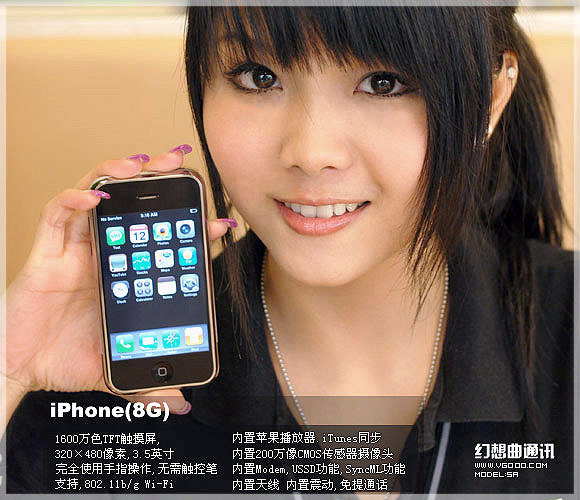
iPhone's Meager Launch
There wasn't iPhone hysteria when the product was released a couple days ago.
From Internetnews.com:
In addition to off-color markets, Apple simply isn't that popular in China yet. Most of my Chinese friends who saw my MacBook laptop were perplexed by a computer running without Windows. Windows, like it is for a lot of people in the States, is the only thing nearly all Chinese people have ever had any experience with. This unfamiliarity with Apple has to make the expensive iPhone an even harder sell for Chinese people.
I would think (and hope) that Apple's market will grow in China like it has in America. Whereas five years ago I had never actually used an Apple, I now would never even consider going back to a PC. I've never had one problem - either with the hardware or software - with my MacBook. It never crashes and runs fast, smooth, and virus-free. Web-surfing, photo-editing, and more complex stuff like video and music editing are vastly superior on a Mac compared to a PC. And it wasn't that expensive compared to Windows-based notebooks because I bought a refurbished notebook off of Apple's website (something I strongly recommend).
While in Beijing in June, I saw a slick new Apple store in the 三里屯 district. It was the first to open in mainland China. The more people are exposed to genuine Apple products - whether through iPhone, iPod, laptop, or desktop - the more I think they'll come to embrace them.
From Internetnews.com:
While "gray markets" may have an influence on Apple's struggles, black markets certainly do as well. A few months ago I wrote about the "Mobile Shanzhai" and the vast availability of counterfeit cellular phones (including the "hiPhone" Apple knock-off).
Image from Socialmediaeo.com
With this week's launch of the iPhone in China, Apple became the latest foreign company to seek a slice of the country's booming mobile market. But some analysts point to factors endemic in China's wireless market that are growing too large to ignore -- and which could have serious implications for competitors in the space.
Some industry observers had predicted a tepid consumer reaction to the iPhone's debut in China, where it's being sold by carrier partner China Unicom. So far, those early expectations might not be far off: China Unicom has sold only 5,000 units so far, Reuters reported.
Analysts partly blame the high cost of the iconic handset, which retails for about $730 to $1,000 without a contract, and because of the fact that it's been stripped of Wi-Fi to comply with government regulations.
However, they've also pointed to another factor playing a huge role in Apple's (NASDAQ: AAPL) aspirations for China: The country's vast gray-market mobile phone business, which research firm iSuppli dubbed the nation's "dirty little secret."
Gray-market (define) handsets are made or sold outside authorized channels, enabling their sellers to avoid value-added taxes and government regulation, and other oversight, like quality assurance testing.
Read On

In addition to off-color markets, Apple simply isn't that popular in China yet. Most of my Chinese friends who saw my MacBook laptop were perplexed by a computer running without Windows. Windows, like it is for a lot of people in the States, is the only thing nearly all Chinese people have ever had any experience with. This unfamiliarity with Apple has to make the expensive iPhone an even harder sell for Chinese people.
I would think (and hope) that Apple's market will grow in China like it has in America. Whereas five years ago I had never actually used an Apple, I now would never even consider going back to a PC. I've never had one problem - either with the hardware or software - with my MacBook. It never crashes and runs fast, smooth, and virus-free. Web-surfing, photo-editing, and more complex stuff like video and music editing are vastly superior on a Mac compared to a PC. And it wasn't that expensive compared to Windows-based notebooks because I bought a refurbished notebook off of Apple's website (something I strongly recommend).
While in Beijing in June, I saw a slick new Apple store in the 三里屯 district. It was the first to open in mainland China. The more people are exposed to genuine Apple products - whether through iPhone, iPod, laptop, or desktop - the more I think they'll come to embrace them.
Thứ Hai, 2 tháng 11, 2009
Seeding Snow
Beijing had a good snow on Sunday. Nothing too out-of-the-ordinary. Except that the white stuff was man-made.
From The Christian Science Monitor:
I wonder what the limitations to creating rain/snow are. From the sounds of it, the circumstances need to be just right for any tinkering to work. It doesn't sound like rain/snow can just be turned on or off on any random day.
With water tables dropping and rivers dying and pollution continuing, North China needs all the water it can get. Last winter in Xi'an, we had a drought that went on for several months. The dry air combined with dusty and coal soot covered streets made for a pretty horrific atmosphere. For the sake of China and its people, I hope that seeding technology can be refined and used effectively.
From The Christian Science Monitor:
In the past, I've voiced my skepticism about the ability for these kinds of seeding programs to actually work. This latest snow storm sounds pretty legitimately man-made. Doesn't sound like it could've happened on its own without the push from the "Beijing Weather Modification Office."
Photo from APBEIJING – When I drew my curtains on Sunday morning to find thick snow falling outside, I thought something weird was going on.
Saturday had been gloriously warm and sunny. And even if the temperature had plummeted overnight, which it clearly had, Beijing winters are generally dry as a bone.
Monday morning, all was revealed. Beijing’s weathermen had been at work, it turned out, seeding the clouds to make it rain. Or snow, as it happened.
“We have to seize every opportunity to increase precipitation,” the head of the Beijing Weather Modification Office, Zhang Qiang, told the daily Global Times. “Beijing had almost no rainfall in October.”
You may not have a Weather Modification Office in your country. You don’t know what you are missing.
Read On

I wonder what the limitations to creating rain/snow are. From the sounds of it, the circumstances need to be just right for any tinkering to work. It doesn't sound like rain/snow can just be turned on or off on any random day.
With water tables dropping and rivers dying and pollution continuing, North China needs all the water it can get. Last winter in Xi'an, we had a drought that went on for several months. The dry air combined with dusty and coal soot covered streets made for a pretty horrific atmosphere. For the sake of China and its people, I hope that seeding technology can be refined and used effectively.
Đăng ký:
Bài đăng (Atom)
Bài đăng phổ biến
-
Over the Thanksgiving break, I asked Qian if she remembered the " This American Life " program we listened to a year ago about an ...
-
On the left hand side of this blog, below the "Labels" section, is a list of links titled "The Best of Mark's China Blog....
-
Qian and I agree that the thing we miss most about living in China is the night life. I'm not talking about clubs or bars or concerts, I...
-
HELLO! How's life? Just got our results and it turned out not bad. Satisfied with it. Heh. Holidays are here. So what are your plans? ...
-
Since Brendz is leaving Malaysia this weekend, we decided to have a catch up session with each other today. We chose Publika as our ...
-
In an attempt at getting back into news blogging, I searched through Google News for China articles today. There's a lot going on here i...
-
Chinatravel.net , probably the best China travel site on the internet, has unveiled its list of the top ten feature articles on the site fro...
-
One of my best friends in the world has an excellent China blog going these days. Richard, a bloke from Newcastle, England who arrived in Xi...
-
China has found something to do with the land that was affected by the earthquake last May. From AFP: SHANGHAI (AFP) — Some of the ruins lef...
-
The Yulong River , near Yangshuo in Guangxi Province, is an amazing place. My family and I went down the river on bamboo rafts two years ag...